
Oncology Esthetics: Skincare During & After Cancer Treatments
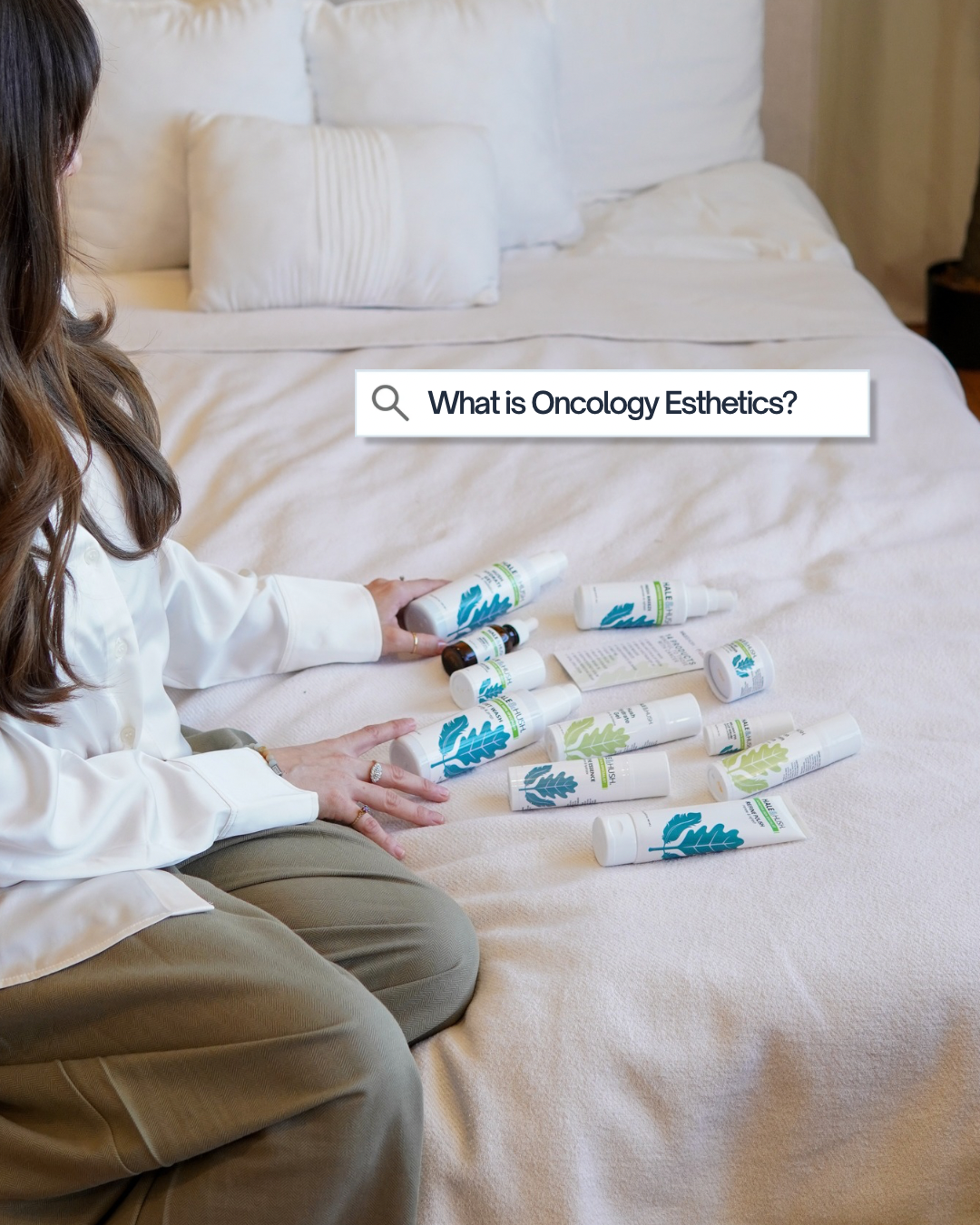
When we think about skincare, most of the time we think about correcting something–breakouts, pigmentation, texture, dryness, or signs of aging. But there are seasons when the skin needs something different.
It may need less correction and more support. This is one of the reasons I chose to become trained in oncology esthetics.
As an oncology-trained esthetician, my role is to understand how certain cancer treatments can affect the skin and to provide thoughtful, gentle, supportive skincare when appropriate.
What Is Oncology Esthetics?
Oncology esthetics is a specialized approach to skincare for people whose skin may be affected by cancer or cancer treatments.
Cancer treatments can affect the skin in many different ways. Depending on the type of treatment, a person may experience dryness, irritation, redness, itching, peeling, pigmentation changes, increased sensitivity or photosensitivity. These changes can happen during treatment, after treatment or sometimes as part of a longer recovery.
Oncology esthetics focuses on adapting skincare to these changes. That means taking a closer look at:
The current condition of the skin
The person’s treatment history
Skin sensitivity and barrier function
Products and ingredients being used at home
What areas may need to be avoided
Appropriate touch and pressure
Sun protection
Comfort and relaxation
When a client should be referred back to their medical team
It is a much more individualized approach rather than just a “gentle facial.”
Who Is Oncology Esthetics For?
Oncology esthetics may be appropriate for people who are:
Currently undergoing cancer treatment
Preparing to begin treatment
Living as a cancer survivor
Experiencing increasing sensitivity after treatment
Looking for a more cautious approach to professional skincare
Every person’s skin and treatment history are different. Chemotherapy, radiation, immunotherapy, targeted therapies, and surgery can affect the skin differently. This is why communication with your healthcare team and a thorough consultation with your esthetician is so important.
How Can Oncology Esthetics Help the Skin?
We aren’t trying to force the skin back to “normal”. The goal is to support the skin where it is. For some client’s, that may mean focusing on hydration and barrier support. For others, it may mean minimizing exfoliation, adjusting massage techniques, choosing gentler products, or placing more emphasis on sun protection.
And the benefits aren’t always just physical.
Having a quiet space where you don’t have to hide changes in your skin or feel pressured to “fix” them can be meaningful too. Sometimes it’s simply having a place where you can feel safe, understood, cared for, and never judged.
Why I Chose to Train in Oncology Esthetics
This training was important to me because of the kind of esthetician I want to be. I’ve always believed that skincare should be individualized–not one protocol repeated on every person.
I wanted to better understand how to work with skin that may be especially vulnerable or sensitized and, most importantly, recognize when the skin needs support instead of correction.
My approach to skincare is already centered around skin health, education, relaxation, and long-term wellness. Oncology esthetics allowed me to deepen that philosophy and become more intentional about how I approached sensitive and treatment-affect skin.
It’s taught me that sometimes the most valuable thing an esthetician can do is simplify, adapt, and listen.
Oncology-Informed Skincare at Pure Skin By Renee
At Pure Skin by Renee, every first-time client begins with a consultation so we can understand your skin before deciding what it needs.
For clients with a history of cancer treatment or increased sensitivity, we’ll discuss your current skin condition, treatment history, products, concerns, and any areas that may need to be avoided.
Depending on your individual needs, a facial may focus on:
Gentle cleansing: cleansing without unnecessarily stripping the skin
Hydration: replenishing moisture when the skin feels dry or dehydrated
Barrier support: prioritizing the skin’s protective barrier rather than aggressively exfoliating or stimulating it
Soothing care: selecting products appropriate for sensitive or sensitized skin
Thoughtful touch: adjusting pressure and techniques based on how your skin responding
Sun protection: supporting long-term skin health with consistent SPF
Hale & Hush for Sensitive & Sensitized Skin
Hale & Hush is one of the professional skincare lines I use because its philosophy aligns closely with my approach to sensitive and sensitized skin. The brand has roots in oncology cosmeceuticals and has expanded its focus to sensitive and health-challenged skin.
Some of the Hale & Hush products I work with that are mindful to those with cancer include:
Quiet Wash - gentle cleansing
Soothe Essence Serum - lightweight hydration and soothing support
Hush Hydrate Gel - hydration and moisture support when the skin needs comfort
Vital Lipid Lotion - richer moisture and barrier support
Hydromelon Cream - lightweight hydration and antioxidant support
Saffron Meristem Cream - nourishing moisture and comfort
Relief Bio Powder - calming and irritation support that can be paired with hydration products
Mist Me - lightweight hydration and refreshing moisture
Remedy Rehab Oil - nourishing support for dry skin
Eye Mousse - gentle hydrating care for delicate eye area
Brilliant Eye & Lip Serum - targeted hydration and replenishment
Refine Polish - gentle exfoliation when appropriate
Having access to gentle products doesn’t mean every product is right for every person. Especially during active cancer treatment skincare should be individualized based on the person’s skin, treatment, medications, and medical guidance.
That’s why I don’t believe in handing everyone the same “oncology skincare routine.”
Don’t Forget Your SPF
Sun protection is an important part of skin wellness, particularly when the skin may be more sensitive to environmental stressors or sunlight.
These all-mineral sunscreens use zinc oxide and are available in a universal tinted and non-tinted options, making it easy to choose the finish that works best for your skin and lifestyle.
It’s a great option for clients looking for mineral sun protection for both face and body.
Gentle Reminder
Oncology esthetics is trained professional skincare and does not diagnose, treat, or cure cancer or medical conditions. Skin reactions during cancer treatments can sometimes require medical attention. Always follow the recommendations of your oncology or medical care team and communicate your current treatments and medications to your esthetician before receiving professional skincare.
If your skin is actively irritated, broken, blistered, infected, or experiencing a significant reaction, professional skincare may need to be postponed until your healthcare provider provides appropriate guidance.
Not sure where to begin? Start with a consultation. Whether you prefer to meet with me in-person or begin virtually, we can talk through your skin and determine the most appropriate next step for you.
With care,
